
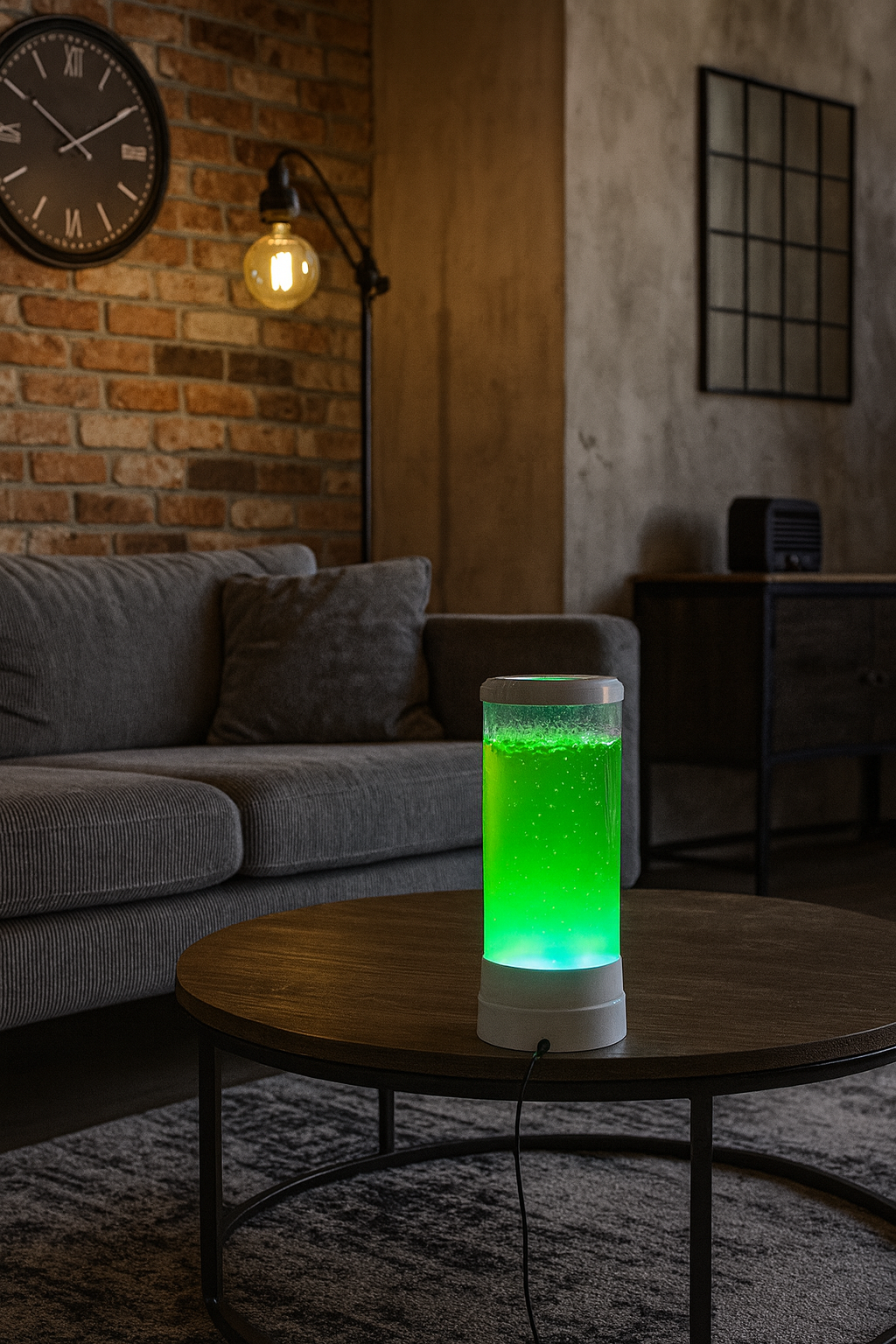
A photobioreactor is a closed system in which microalgae or other light-dependent organisms grow under controlled conditions. Light, air, and nutrients are provided in such a way that the algae optimally carry out photosynthesis, absorb CO₂, and release oxygen. What exists in industry as meter-high glass tubes is now also available in living-room size.
How does a photobioreactor work?
The principle is simple: microalgae float in a nutrient medium made of water and mineral salts. Light, whether daylight or LEDs, drives photosynthesis. An air pump performs two tasks at the same time: it keeps the culture in motion so that all cells are exposed to light, and it supplies CO₂ from the ambient air, the raw material for photosynthesis. As a result, algal biomass grows and oxygen is released.
Unlike an open pond or aquarium, a photobioreactor is closed or semi-closed. This reduces contamination, makes the conditions controllable, and allows for significantly higher cell densities.
Where are photobioreactors used?
In industry, photobioreactors produce algal biomass for nutritional supplements (spirulina, chlorella), cosmetics, animal feed, and biofuels. In research, they are used for CO₂ sequestration from exhaust gases and wastewater treatment. And in space travel, they are being tested as part of life-support systems because microalgae convert CO₂ into oxygen in a very small space.
A 2023 study shows that microalgae are also interesting for indoor air: in a test chamber, Chlorella vulgaris completely removed formaldehyde and volatile organic compounds (VOCs), bound particulate matter, and increased the oxygen content and humidity, something HEPA filters and activated carbon did not achieve in comparison¹.
Photobioreactor for the living room: how our AlgaeTower came to be
Our photobioreactor is based on a modified container system originally developed for decorative purposes. Through targeted adjustments in ventilation, lighting, and biological application, we have created a functional system for cultivating microalgae in living spaces.
What was once intended to be purely decorative became the foundation for a living, functional product for modern interiors at ZeaLite: the AlgaeTower with 1.5 liters of living chlorella culture, integrated LEDs, and a quiet air pump.
What makes a photobioreactor in the living room special
Oxygen from photosynthesis:
The living chlorella culture absorbs CO₂ from the air and releases oxygen. By biomass, chlorella is one of the most efficient photosynthetic organisms, and on bright days you can see the fine oxygen bubbles rising in the culture.
Living system instead of static decor:
Unlike plant imitations or technical devices, the reactor is based on a real biological process. The culture grows, changes, and reacts to light and care.
Humidity remains consistent:
Unlike some technical air purifiers, a photobioreactor does not dry out the room air. The algae live in water, and a portion of it evaporates gently into the room.
No replacement filters:
No filter changes, no spare parts. The system works through the replenishment of nutrients and light.
Compact and easy to use:
28.5 cm high, USB-C connection, plug-and-play. A few drops of nutrients every few weeks are enough to keep the culture alive for months.
Conversation piece and design statement:
A product that attracts attention, generates interest, and brings biotechnology into everyday life in a tangible way.
Looking for something for your home or office that looks good, is alive, and produces oxygen? Then our photobioreactor is just the thing for you.
¹ Wang et al., Environmental Science and Pollution Research 30, 2023: https://link.springer.com/article/10.1007/s11356-023-25799-8